St Andrew by the Wardrobe - History
A brief history and description
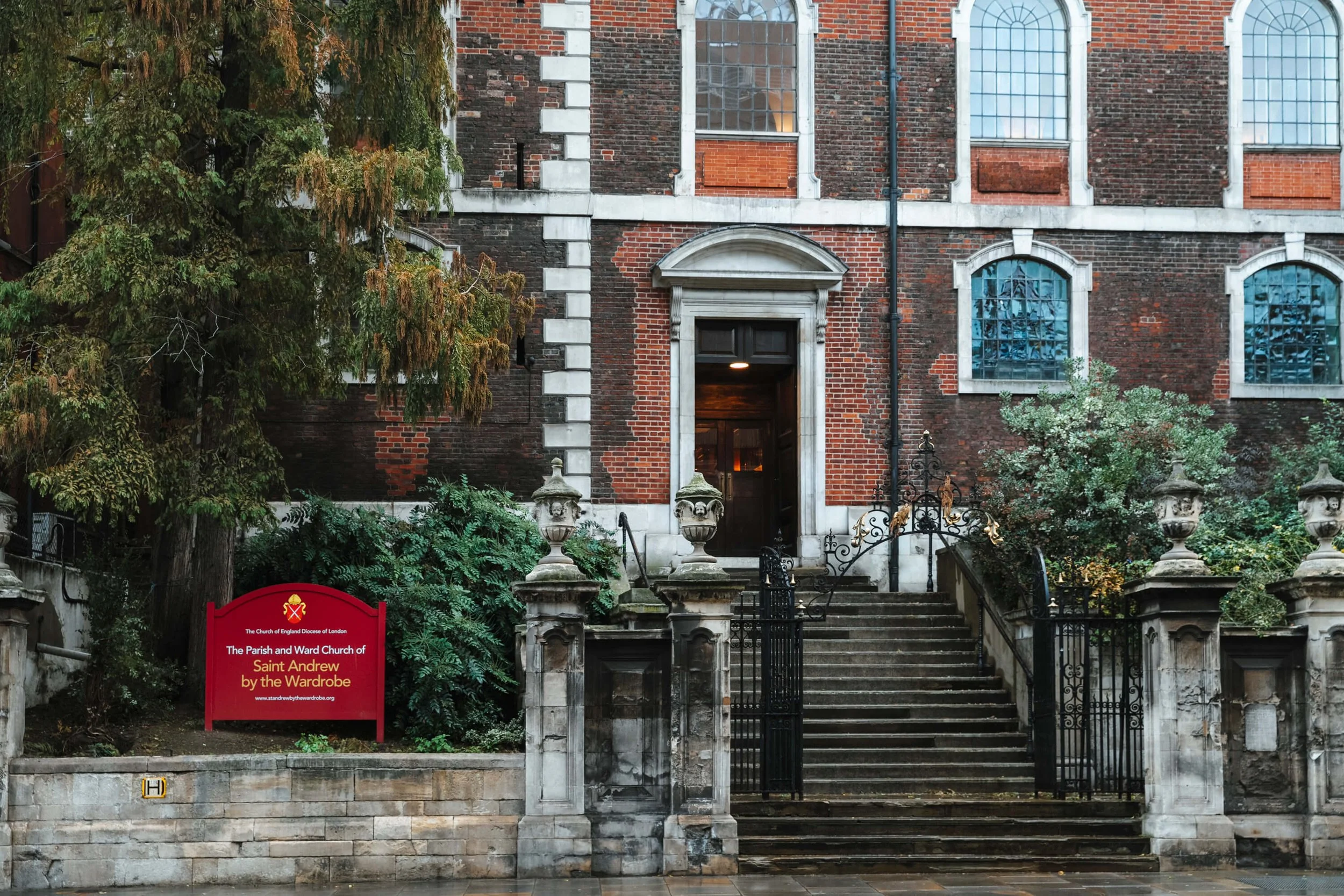
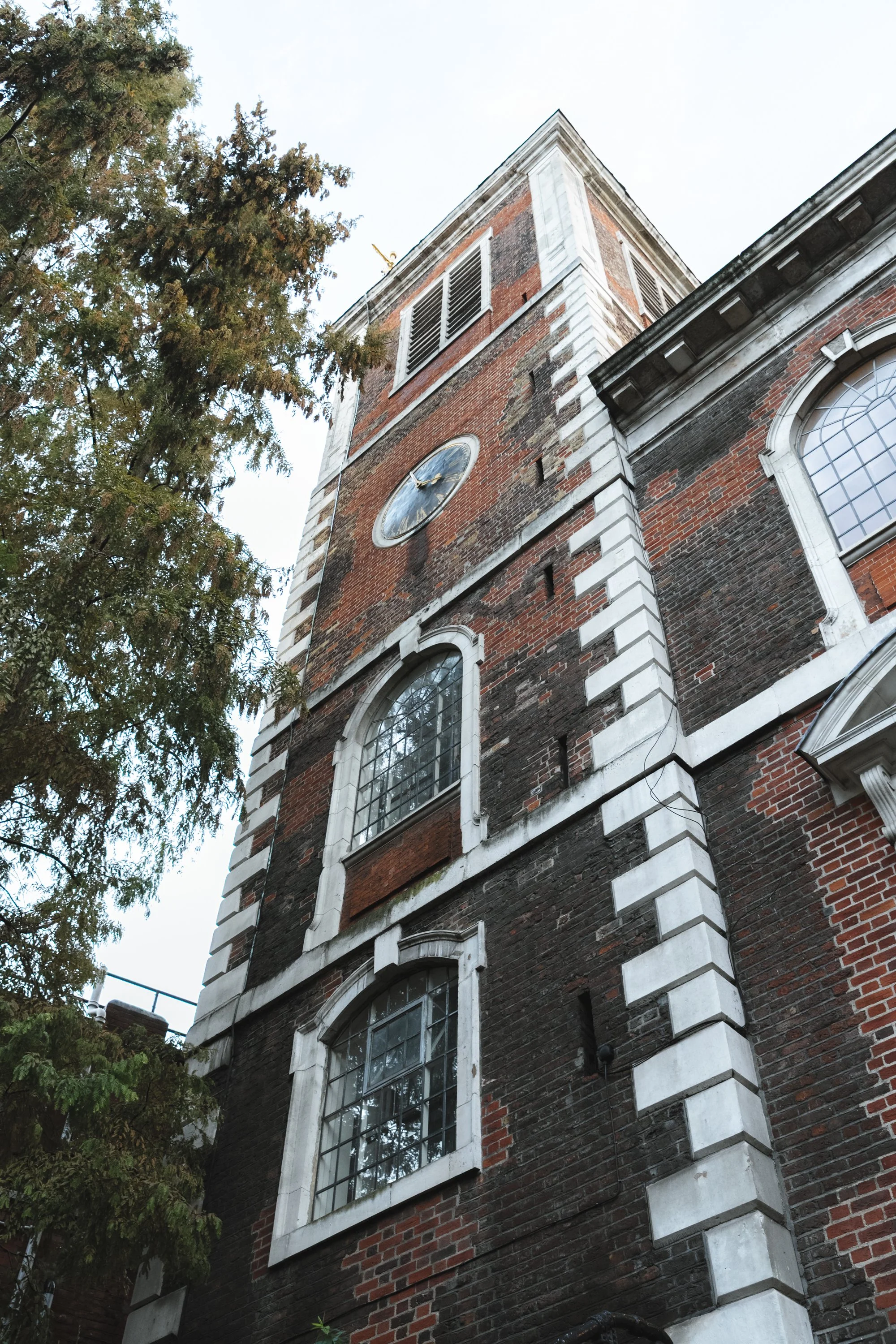
Dedicated to St Andrew the Apostle, the church is sited on an elevated and imposing position on the north side of Queen Victoria Street. Originally known as St Andrew juxta Baynard Castle, due to its proximity to the former great medieval fortress of that name, the church received its present title, “by-the-Wardrobe”, after 1361 when the King’s Great Wardrobe, which housed the royal stores and ceremonial robes, was moved from the Tower of London to new quarters nearby. (A plaque in Wardrobe Place marks the site). Both the church and the Wardrobe were destroyed in the Great Fire of London in 1666. However, following its destruction, St Andrew’s was rebuilt on the original site between the years 1685 to 1693 by Sir Christopher Wren. Of the many churches in the City rebuilt by Wren, St Andrew’s was his last, and at £7,060 16s 11d, paid for largely by funds derived from the coal tax levied to help post-Fire reconstruction, it was his least costly.
To the west of St Andrew’s, the church of St Ann Blackfriars also succumbed to the Great Fire. It had been consecrated in 1597 (although there had been an earlier chapel) and its parish occupied the site of the great medieval priory of the Dominicans, or ”Black Friars“, which had earlier been dissolved by King Henry VIII in 1538. St Ann’s church was not rebuilt, and its parish was subsequently united to that of St Andrew’s. Two small portions of its churchyard remain in Ireland Yard and Church Entry.
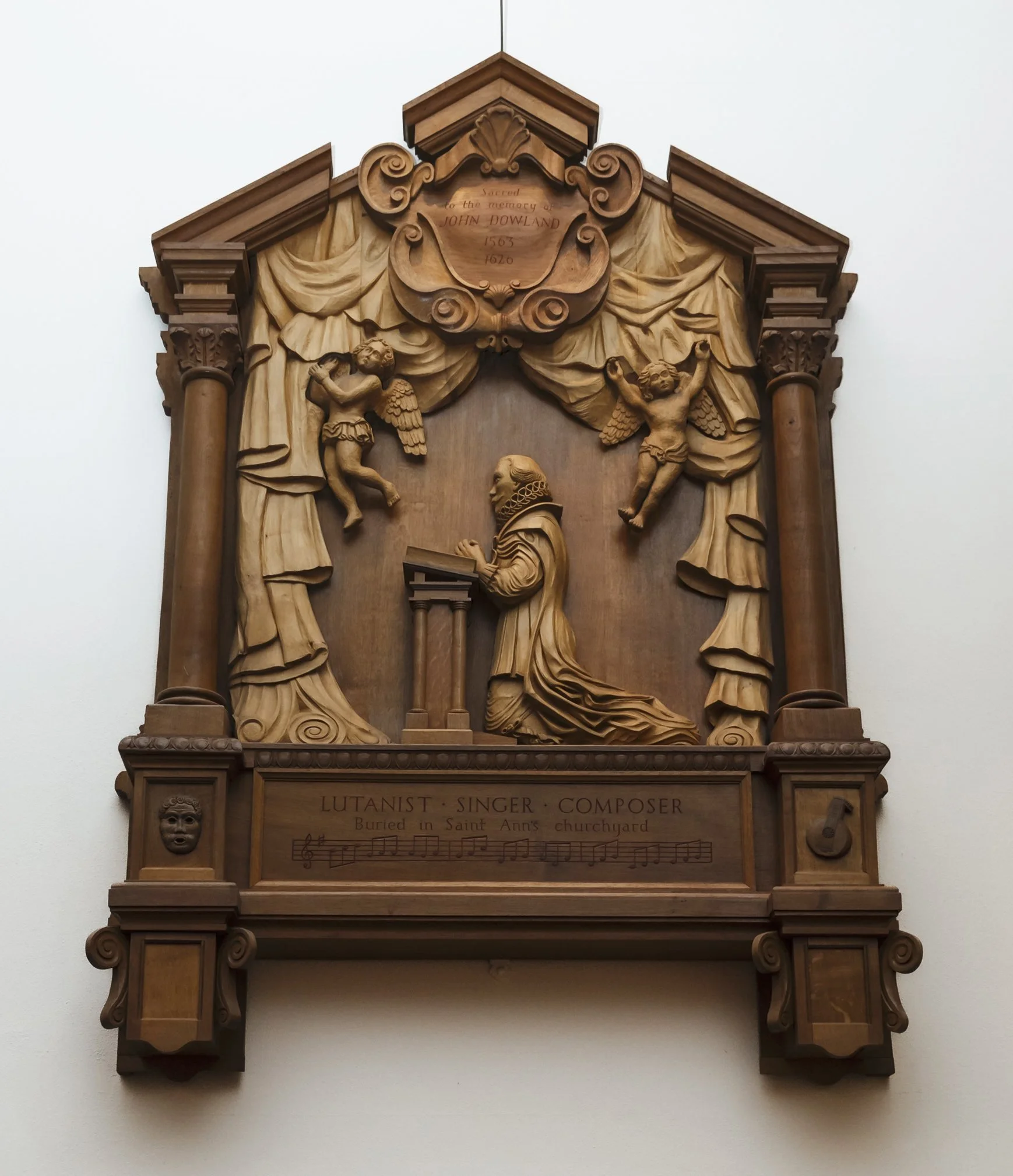
St Andrew’s has had some distinguished Rectors, including in the 18th century William Romaine, the renowned evangelist, and William Goode who in 1809 is thought to have founded the first Sunday School in the City. Isaac Saunders, who in 1836 died in the course of his New Year’s address. (A marble monument to him has survived.) The mortal remains of all three have been interred beneath the church. John Harding departed in 1852 to become the first Bishop of Bombay. The Church Missionary Society was founded in the neighbouring Rectory in 1799. Equally, there have been some notable parishioners, the most famous being that of William Shakespeare. The playwright worked close by at the Blackfriars Playhouse for at least 15 years and would have known the medieval church well. He eventually bought a property in Ireland Yard, which was also in St Andrew’s Parish. Today, Playhouse Yard preserves the memory. Other parishioners have included the composer John Dowland, playwright Ben Jonson and portrait painter Sir Anthony Van Dyck.
St Andrew’s was almost completely gutted by incendiary bombs during the night of 29th – 30th December 1940, leaving only the tower and walls which survived. However, the church was meticulously reconstructed to the designs of Marshall Sisson between 1959 and 1961, with extensive internal oak panelling and furnishings.
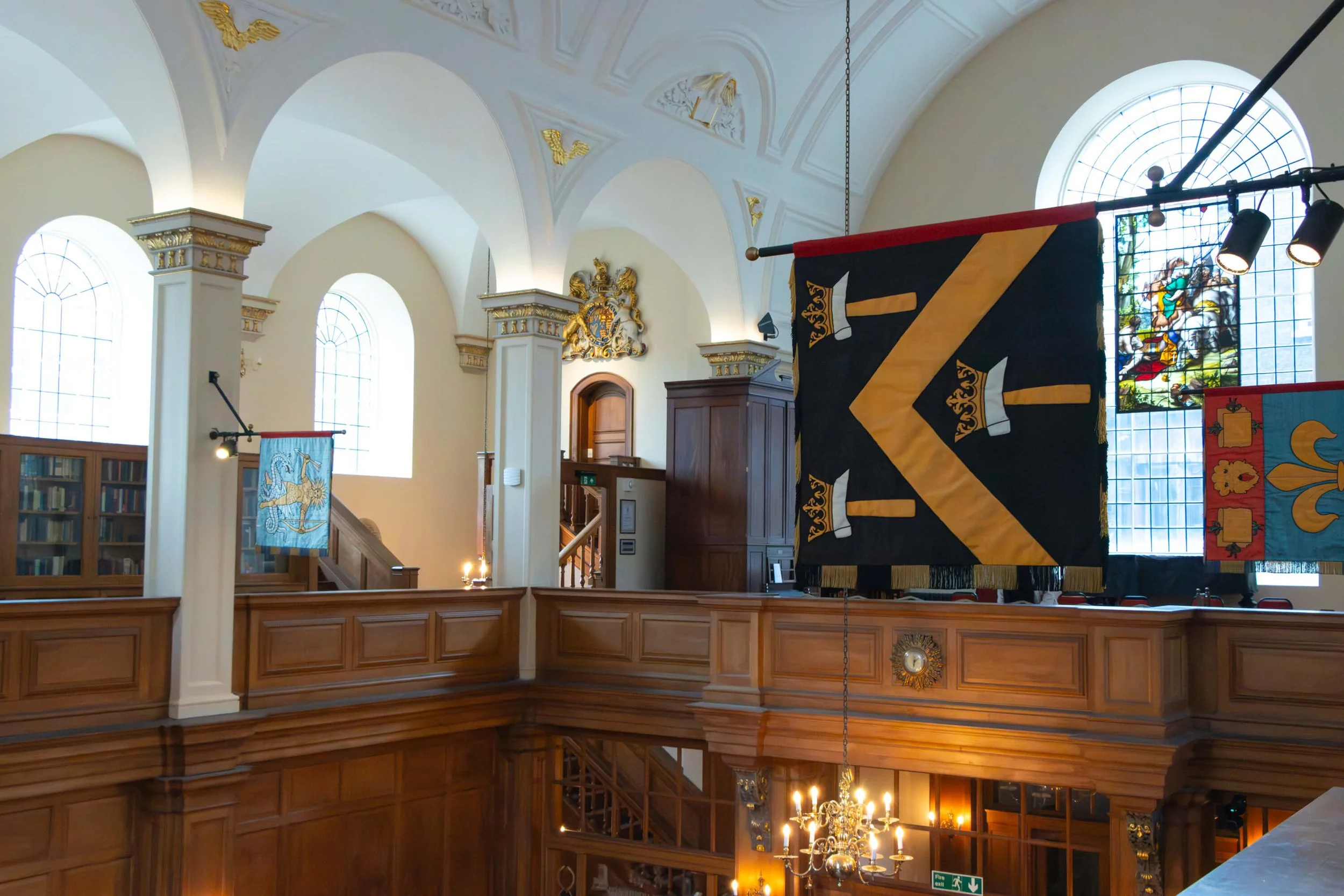
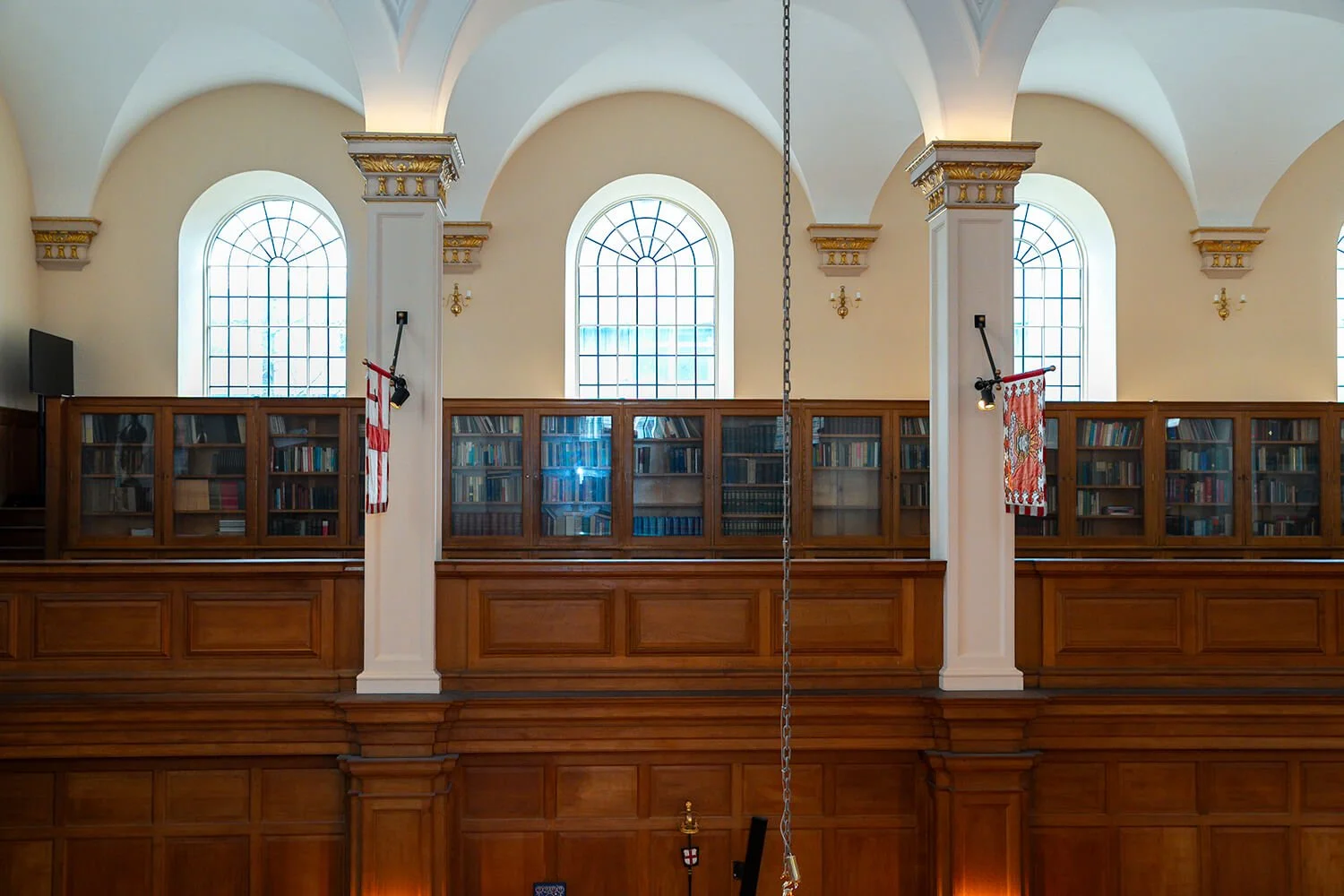
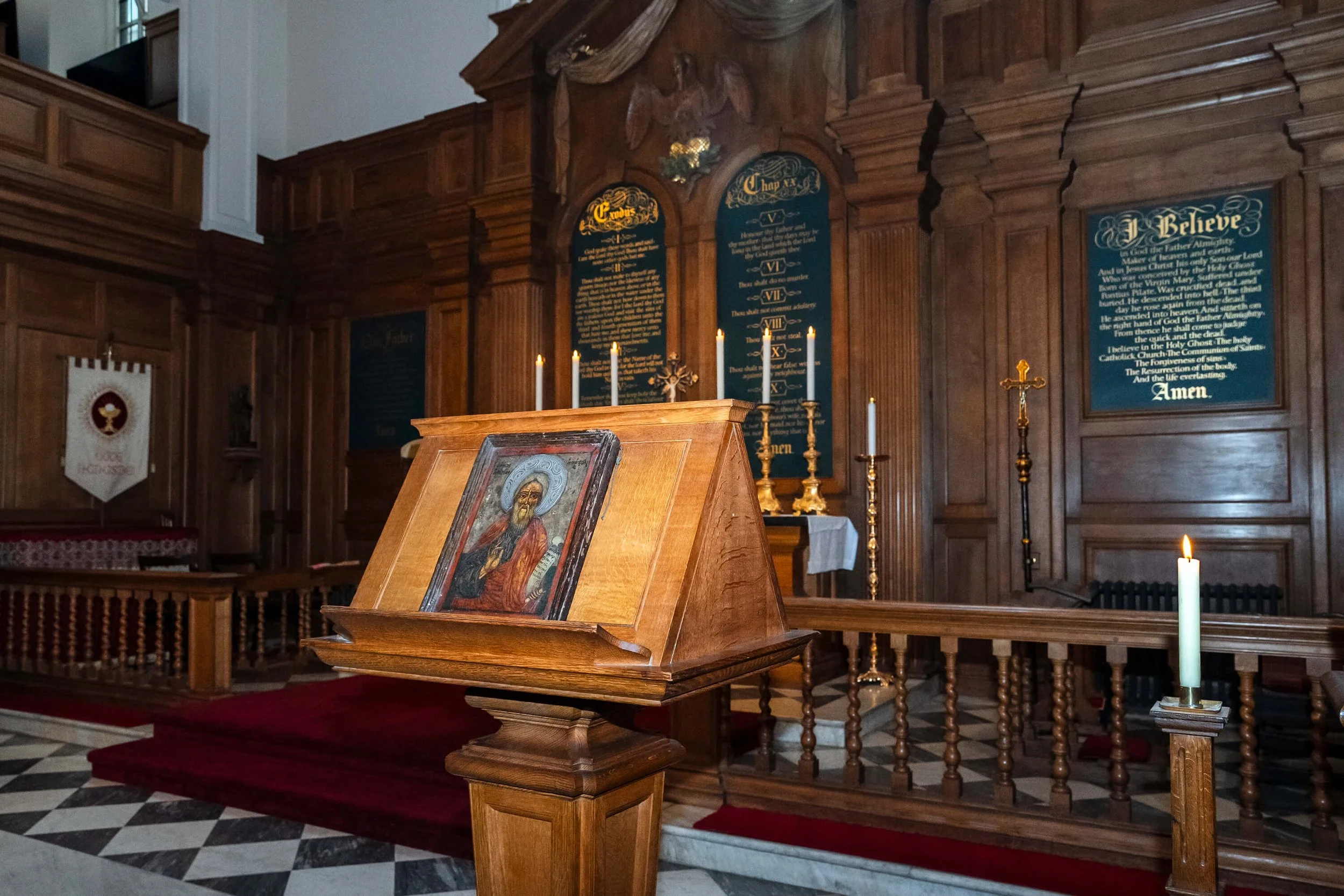
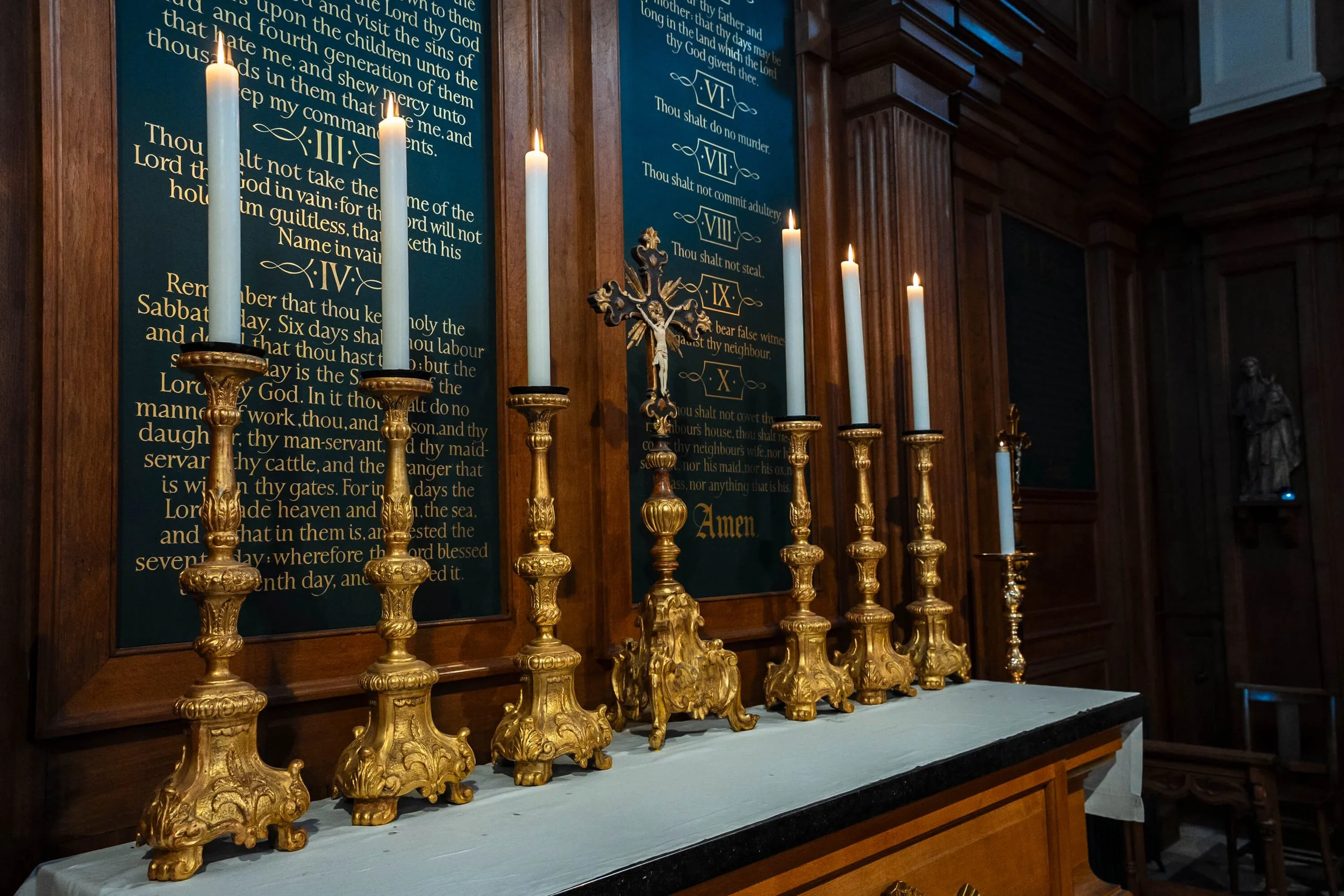
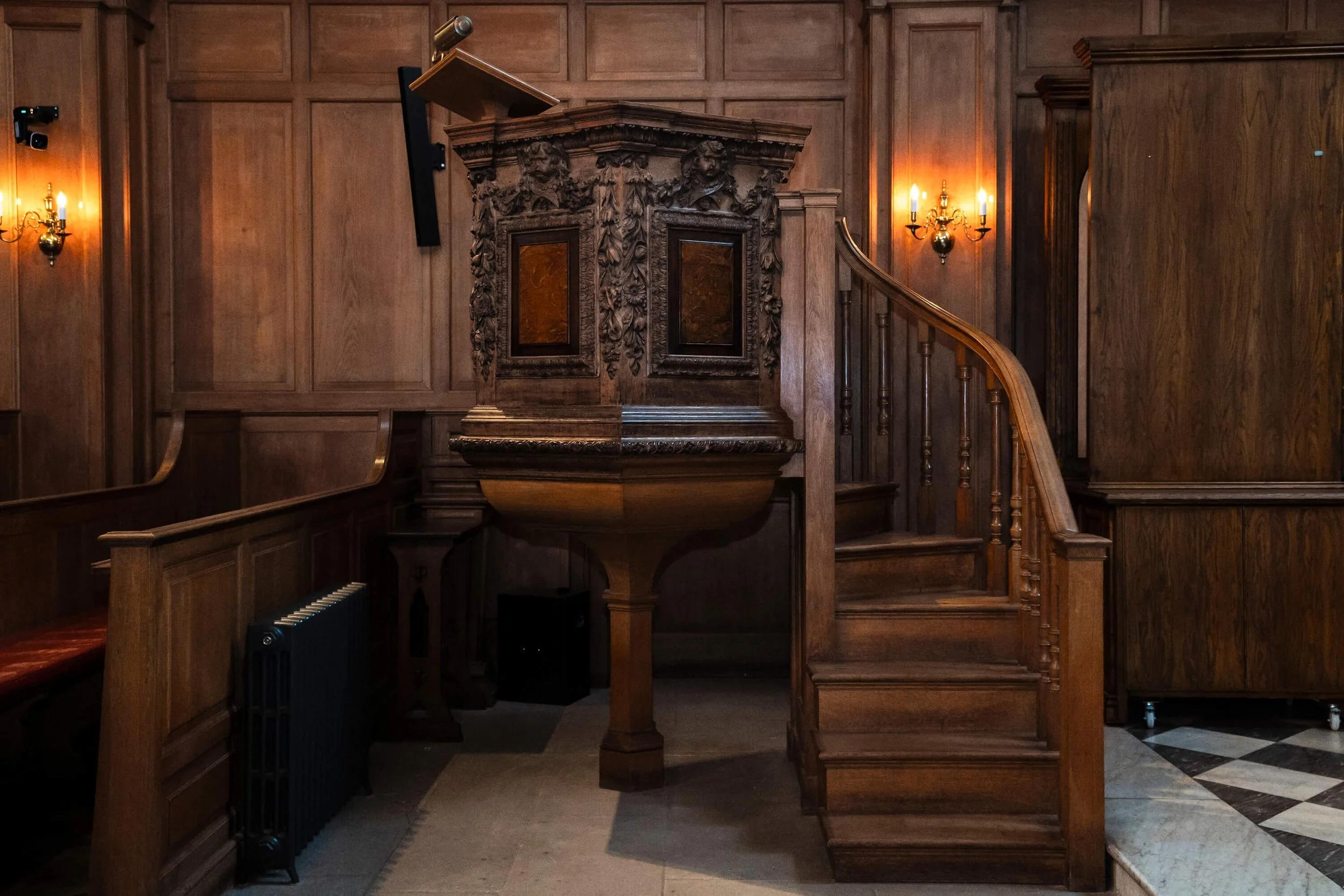
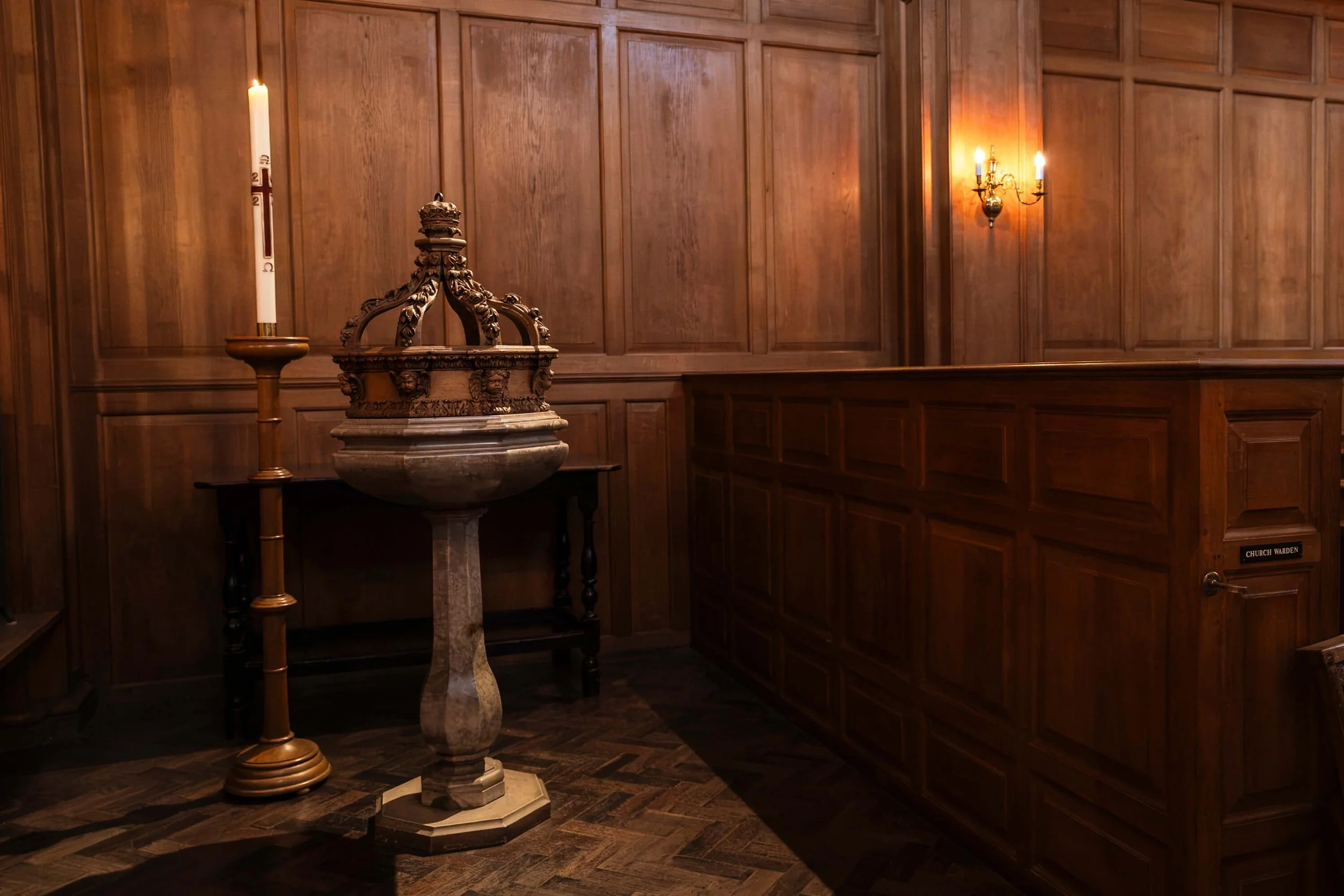
On the south side a small chapel dedicated to St Ann has been incorporated. The decorated plaster tunnel-vaulted ceiling over the nave is a copy of Wren’s original design. Furnishings contemporary with Wren from other City churches include the pulpit and font and cover, both from St Matthew Friday Street (demolished 1884), the Stuart royal arms from St Olave Old Jewry (demolished 1888) and the weather-vane from St Michael Bassishaw (demolished 1900).
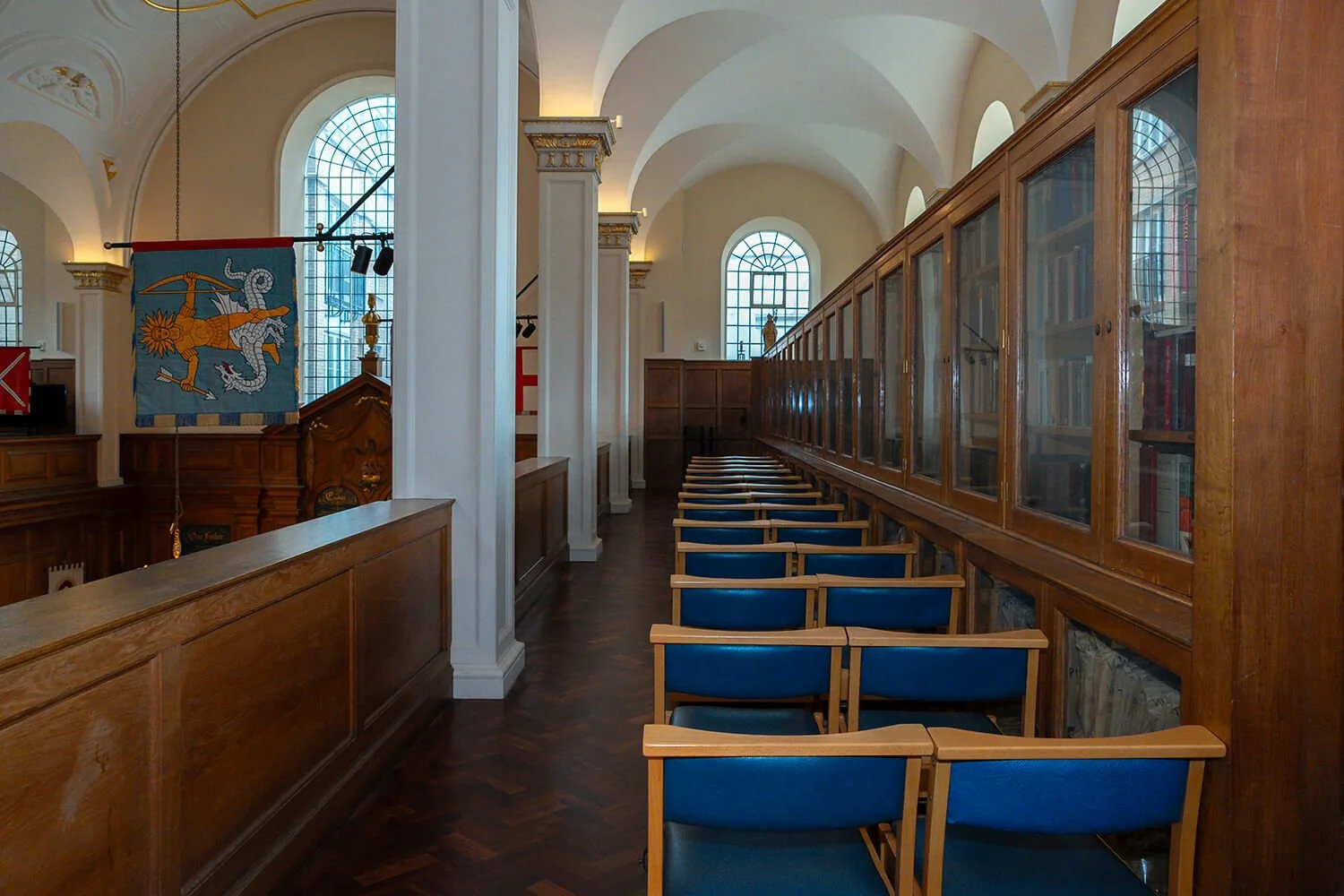
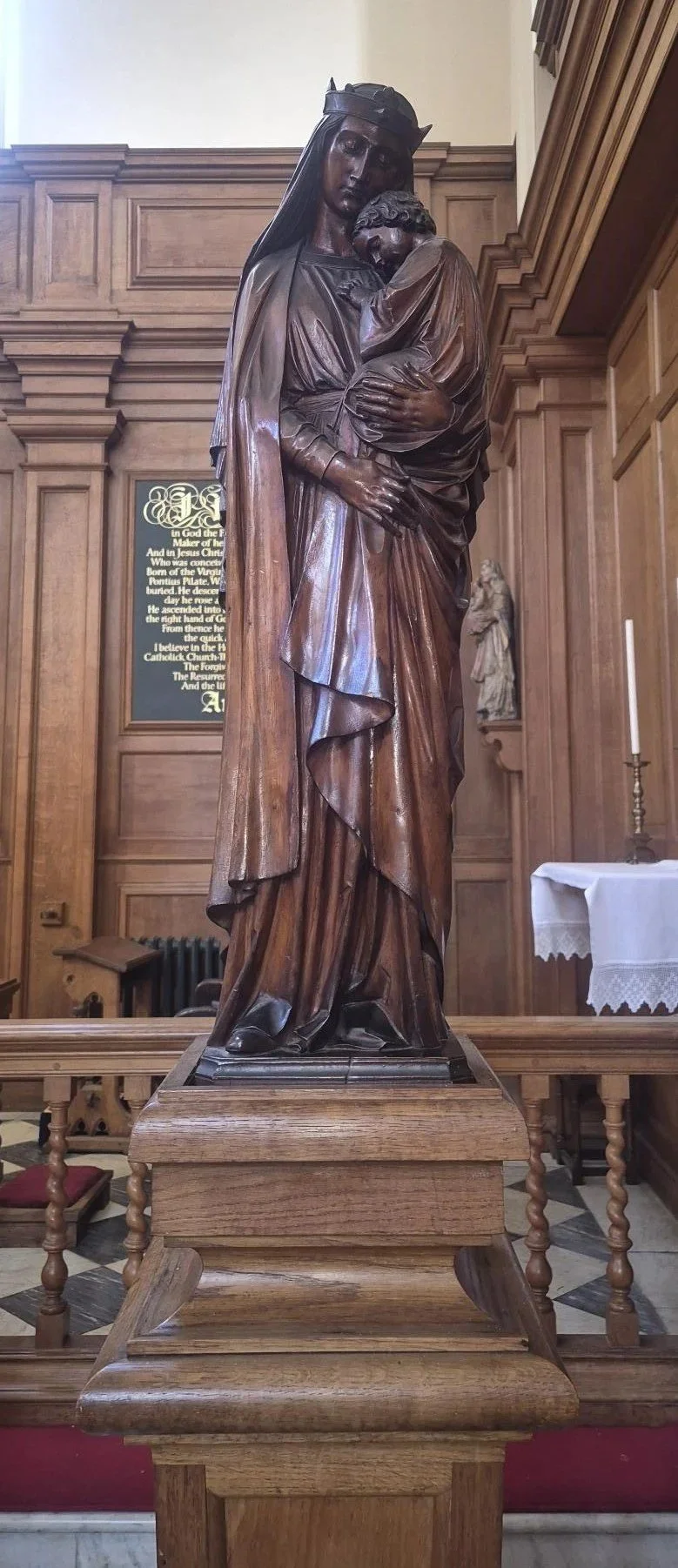
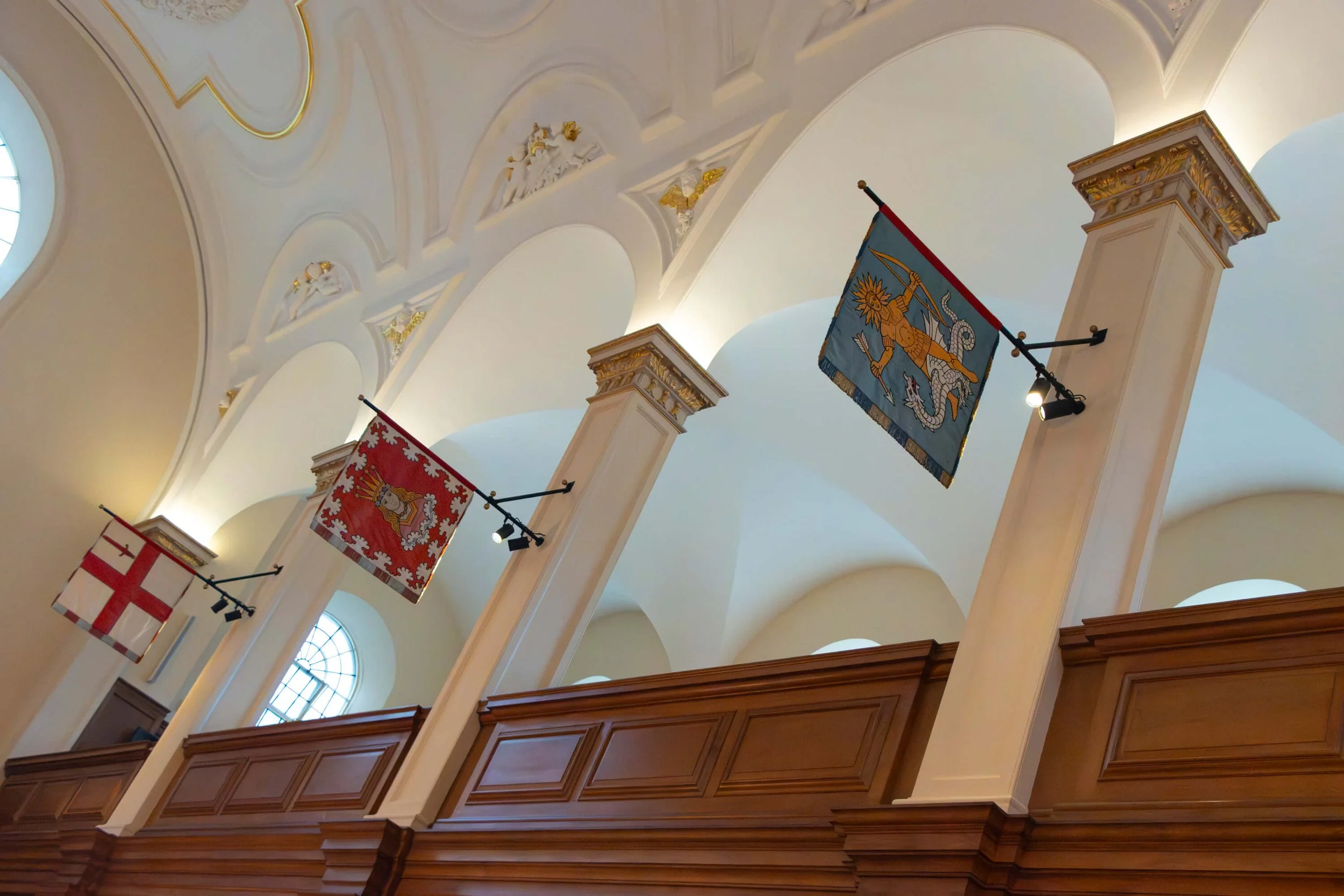
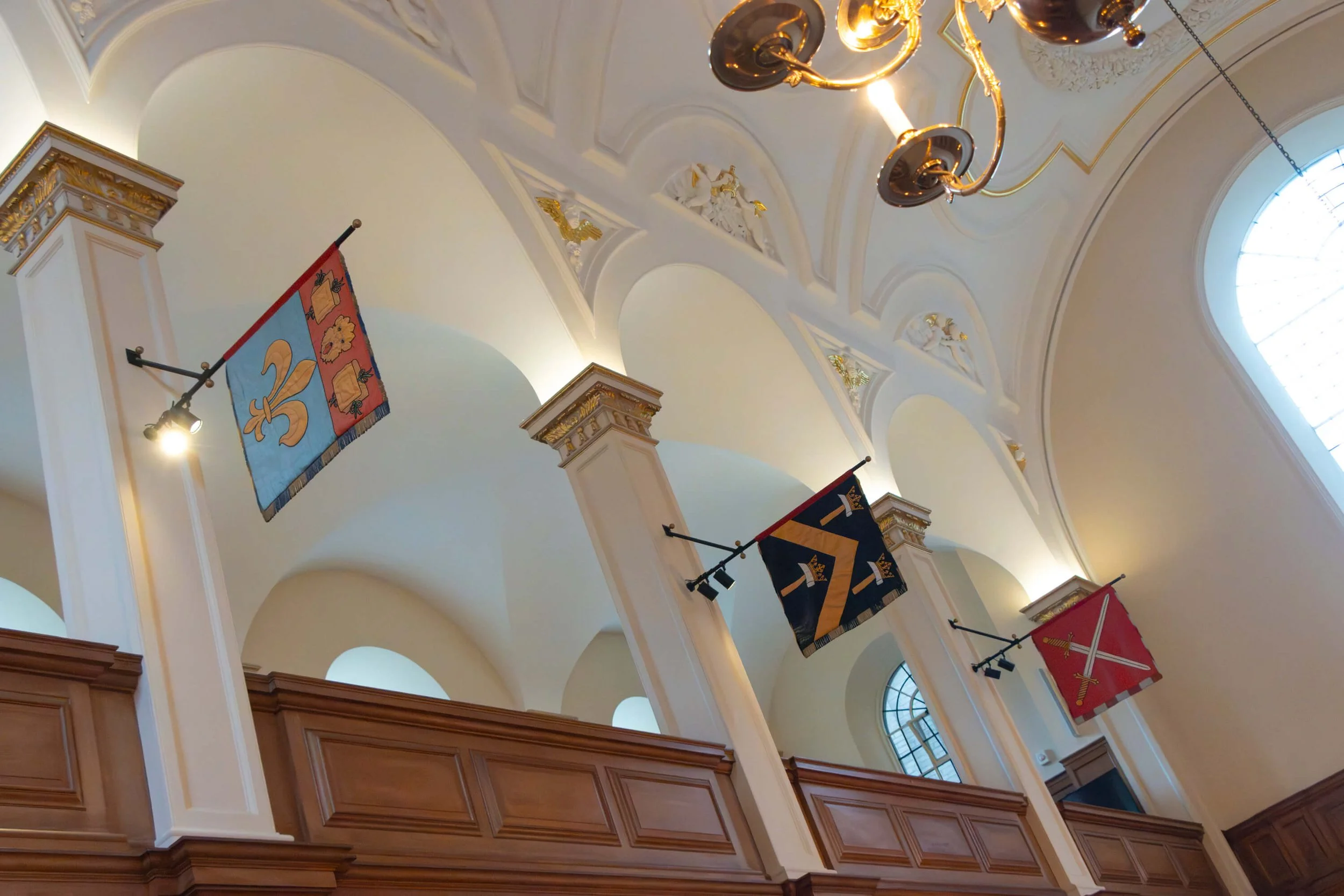
Two further ancient acquisitions, both in the sanctuary, include a figure of St Andrew, dated circa 1600, and a figure of St Ann holding in her arm the Blessed Virgin Mary who in turn holds the infant Jesus, dated circa 1500. A small pipe organ in the gallery was built by John Snetzler in 1769. Within the nave hang six banners of institutions with which the parish is connected, including the Mercers’ Company which, jointly with the Parochial Church Council, are Patrons of the Benefice.
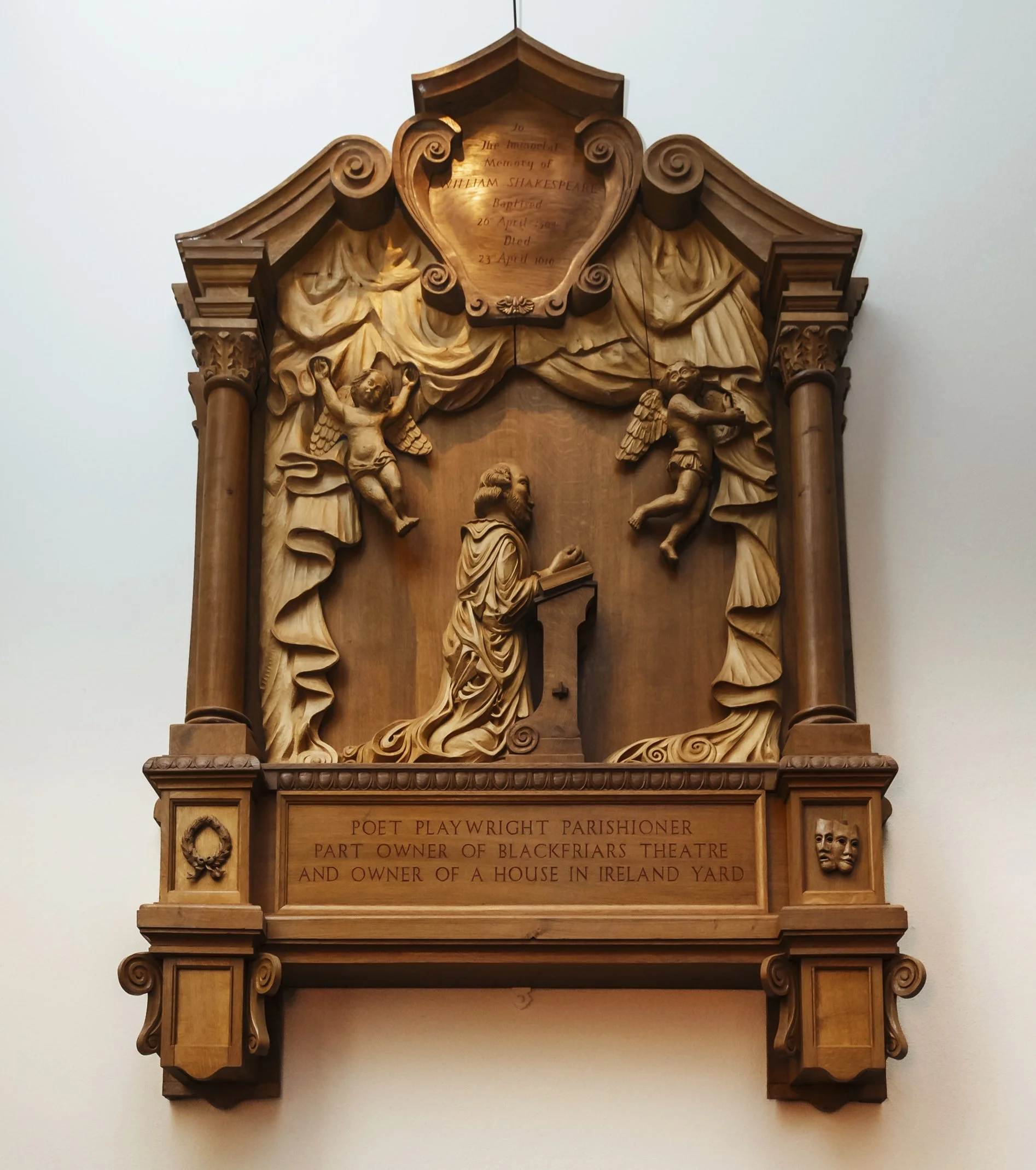
The etched glass panel in the narthex is a memorial to Ivor Bulmer-Thomas, who was Churchwarden for almost forty years and who was primarily responsible for the oversight of the post-war reconstruction. In tribute to its most distinguished resident, the modern St Andrew’s now features a memorial to William Shakespeare in the west gallery, carved in oak and limewood. There is also a matching memorial to one of Shakespeare’s contemporaries, the famous lutenist, singer and composer John Dowland (1562-1626) who was buried in the churchyard of St Ann’s, Blackfriars.
The memorials are either side of a panel of painted glass depicting the conversion of St Paul, dated c. 1720. In a rather fanciful scene, Shakespeare and Dowland are shown kneeling on a stage while cherubs hold back the final curtain. Under the window between the pair is the following inscription:
‘If music and sweet poetry agree,
As they must needs, the sister and the brother…
Dowland to thee is dear, whose heavenly touch
Upon the lute doth ravish human sense…’
Appropriate though these lines may be in Dowland’s case, they have only a slim link with William Shakespeare. Although they come from The Passionate Pilgrim, a collection of verse published in 1599 with Shakespeare’s name on the title page, this poem was in fact written by one Richard Barnfield.
Between 2021 and 2023, St Andrew’s underwent a period of renovation. Works included renewing the electrical system and replacing the broken heating with air source heat pumps. Visitors now enter a warm, well-lit space. With the addition of the wheelchair ramp and the improved kitchen and toilet facilities, the church is now accessible to all. The churchyard terrace is fully accessible through the church for all to enjoy a welcoming outdoor space in the midst of a bustling city. The air source heat pumps means that St Andrew's is operating as close as possible to Carbon Net Zero which is inline with the Church of England policy of Net Zero by 2030.
St Andrew’s is officially designated as the Ward Church for the Ward of Castle Baynard and is also a spiritual focus for many businesses, institutions and individuals both within the parish and beyond. It is used for regular Anglican worship, educational activities, ceremonial occasions by our long-standing City partners and welcomes tourists, schools and local visitors with daily opening during the week. In addition to worship, the excellence of its acoustic qualities provides an ideal facility for a great number of activities, particularly recitals and lectures.
For visitors, it offers a rich and diverse cultural experience. The church is in addition the London Ministry Hub for The Coptic Orthodox Diocese of London, with its broad and diverse level of engagement at the local, national and international level. The Coptic City Mission and its young volunteers now have a new base at St Andrew's enabling it to better reach the local homeless.
Timeline of St Andrew by the Wardrobe